
Why the promise of a stronger core may be rather more complicated than fitness professionals sometimes suggest.
If you have ever visited a gym, consulted a personal trainer or searched online for ways to protect your back, you have probably encountered the idea of core stability.
The message is usually straightforward: your abdominal muscles, particularly the deeper muscles lying beneath the familiar six-pack, form a kind of natural corset around your spine. If these muscles are weak, poorly coordinated or insufficiently activated, your spine becomes unstable, leaving you vulnerable to back pain and injury.
The solution, we are told, is to strengthen your core. Planks, abdominal exercises, controlled breathing and carefully prescribed movements will supposedly teach your deep abdominal muscles to support your spine properly.
It is an appealing explanation. It is also considerably more simplistic than the science suggests.
A challenge from within the profession
This way of thinking has not gone unchallenged. One of its most prominent critics is Professor Eyal Lederman, an osteopath and researcher in neuromuscular and movement rehabilitation.
In his influential 2010 paper, The Myth of Core Stability, Lederman questioned the scientific foundations of the core-stability approach. He argued that research findings about the activity of deep abdominal muscles had been turned into much broader claims than the evidence justified.
His objections included several important points: that no small, isolated group of muscles has exclusive responsibility for stabilising the spine; that weak abdominal muscles do not necessarily cause back pain; that consciously activating particular muscles is not necessarily beneficial; and that core-stability exercises have not been shown to be superior to other forms of exercise.
The paper provoked considerable discussion among physiotherapists, osteopaths, exercise specialists and researchers. Some welcomed it as a necessary challenge to an approach that had become almost unquestioned in parts of the fitness and rehabilitation industries. Others defended the value of specific exercises designed to improve muscular coordination and control.
The debate has not simply been a matter of one side being right and the other wrong. Researchers have continued to investigate how trunk muscles contribute to movement, how their activity may change in people with back pain, and whether particular exercise programmes offer advantages for particular patients.
There is, however, an important distinction between recognising that the trunk muscles play a vital role in movement and claiming that everyone needs to train a special set of core muscles to protect their spine.
Is there really a special set of muscles responsible for stabilising your spine?
The term core tends to conjure up an image of a distinct group of muscles whose principal job is to hold the spine securely in place. Particular emphasis is often placed on the transversus abdominis, a deep abdominal muscle that wraps around the trunk.
But the body does not work quite like this.
The muscles of the abdomen, back, pelvis and hips work together, in varying combinations, to control movement and maintain posture. No single muscle, or small group of muscles, has exclusive responsibility for stabilising the spine.
The transversus abdominis certainly contributes to this process, but so do numerous other muscles. Their activity changes according to what we are doing: standing, walking, bending, lifting, reaching or turning.
This is not a mechanical system in which one particular muscle acts as a protective belt that must be kept permanently tight.
Does a weak core cause back pain?
One of the most influential ideas behind core training is that people with back pain have poorly functioning abdominal muscles, and that strengthening these muscles will correct the underlying problem.
There is some evidence that people with low-back pain may show changes in the way certain trunk muscles are activated. But this does not necessarily mean that the muscles are weak, or that these changes caused the pain in the first place.
They may, at least in some circumstances, be adaptations to pain or changes in movement.
Nor does the presence of weak abdominal muscles automatically explain back pain. Many people with weak abdominal muscles have no back pain, while people with strong abdominal muscles can suffer from it.
Back pain is complex. Physical loading, previous injury, general fitness, sleep, stress, emotional state and other individual circumstances can all play a part. Reducing it to a problem of abdominal weakness overlooks much of what may actually be happening.
Do we need to consciously brace our abdominal muscles?
Some core-stability programmes encourage people to draw in their abdomen, tighten their deep abdominal muscles or maintain a degree of muscular tension throughout everyday activities.
There may be situations in which deliberate bracing is useful, particularly when preparing to lift a heavy load. But it does not follow that we should consciously hold our abdominal muscles tight whenever we move.
Normal movement depends on muscles contracting and relaxing in response to changing demands. Excessive or unnecessary tension can make movement less economical and interfere with the fluid coordination that skilled movement requires.
The body is generally rather good at organising its own muscular activity without our having to supervise every contraction.
Do core-stability exercises actually work?
Here it is important to distinguish between two different questions:
- Can exercises designed to improve core stability help people with back pain?
- Are they more effective than other forms of exercise?
The answer to the first question is yes, they can help. Some people benefit from exercises that improve trunk control, coordination and confidence in movement.
The more important question, however, is whether these exercises have a special advantage over ordinary exercise.
Research comparing motor-control and core-stability programmes with other forms of exercise has generally failed to establish a consistent, clinically important superiority. In other words, people may improve through core training, but they may improve just as much through other forms of appropriately chosen exercise.
This is an important distinction. An exercise programme can be beneficial without being uniquely beneficial. It also means that there is no compelling reason to assume that everyone with back pain needs a specialised core-stability programme.
This is where Lederman’s criticism remains particularly relevant. He was not arguing that these exercises could never help anyone. He was questioning the claim that they possess a special therapeutic value because they strengthen or retrain a particular group of muscles.
What about preventing back injuries?
The idea that a strong core protects the spine from injury is particularly attractive. It suggests that, by strengthening a particular group of muscles, we can make our backs more resistant to the demands of everyday life.
Unfortunately, the evidence for this is far less convincing than the confident claims made in some fitness programmes.
Strength and physical conditioning are undoubtedly valuable. But there is no good reason to believe that strengthening the deep abdominal muscles, or learning to keep them activated, provides a special guarantee against back injury.
The spine is supported by a complex combination of muscles, ligaments, joints and other tissues. Its ability to tolerate physical demands depends on many factors, including general conditioning, the nature of the activity and the body’s capacity to adapt to loading.
So, should we abandon core exercises?
Not at all.
Exercises involving the abdominal and back muscles can be useful. Planks, bridges, squats and other strengthening exercises may all have a place in a sensible fitness programme. Specific motor-control exercises may also be appropriate for people who have particular difficulties with movement.
Lederman’s critics are right to point out that muscular coordination and control matter, and that particular patients may benefit from exercises addressing their individual difficulties. But this does not establish that a standardised core programme is necessary or superior for everyone.
The problem is not the exercises themselves. It is the exaggerated claims sometimes made for them.
There is a difference between saying that strong trunk muscles contribute to physical function and saying that a particular set of deep abdominal muscles must be trained to stabilise the spine and prevent back pain.
The first is reasonable. The second goes considerably further than the evidence justifies.
A more natural approach to movement
Perhaps the most useful lesson is that we should be wary of treating the body as though it were a collection of mechanical components, each requiring its own corrective exercise.
Rather than concentrating exclusively on isolated abdominal muscles, it makes sense to develop general strength, mobility, coordination and physical confidence. Walking, swimming, cycling, resistance training and activities that involve bending, reaching, turning and carrying can all contribute to this.
Exercise should be appropriate to the individual, their physical condition and their particular difficulties. Someone recovering from back pain may need a more carefully tailored programme than someone simply wishing to maintain fitness.
And, of course, persistent or severe back pain deserves proper assessment rather than an automatic prescription for abdominal exercises.
The bottom line: Your core muscles matter, but they are not a magic corset protecting your spine. Core-stability exercises can be useful, but they are not uniquely effective, universally necessary or a guarantee against back pain. A strong, adaptable body is probably a more worthwhile goal than an obsession with keeping your abdomen permanently switched on.
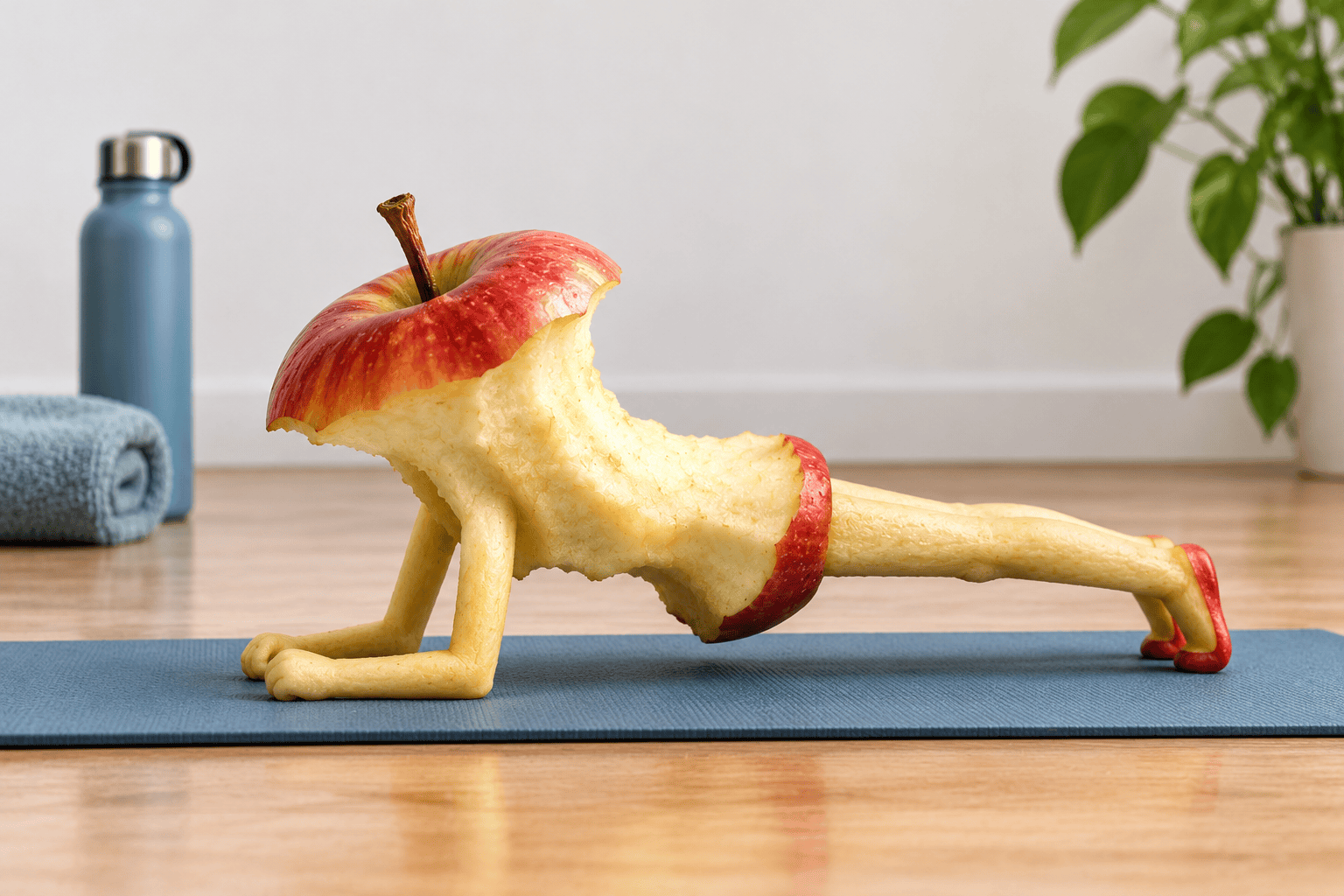
[Image: AI.]

